AIRR@CAM 2026
AIRR@CAM day will provide an opportunity to share experiences using Dawn, showcase research and technical use cases, hear updates from the Cambridge Research Computing team, and help shape priorities for the AIRR service moving forward.
Date and Time: 15th May 2026 - 09:30 - 16:30.
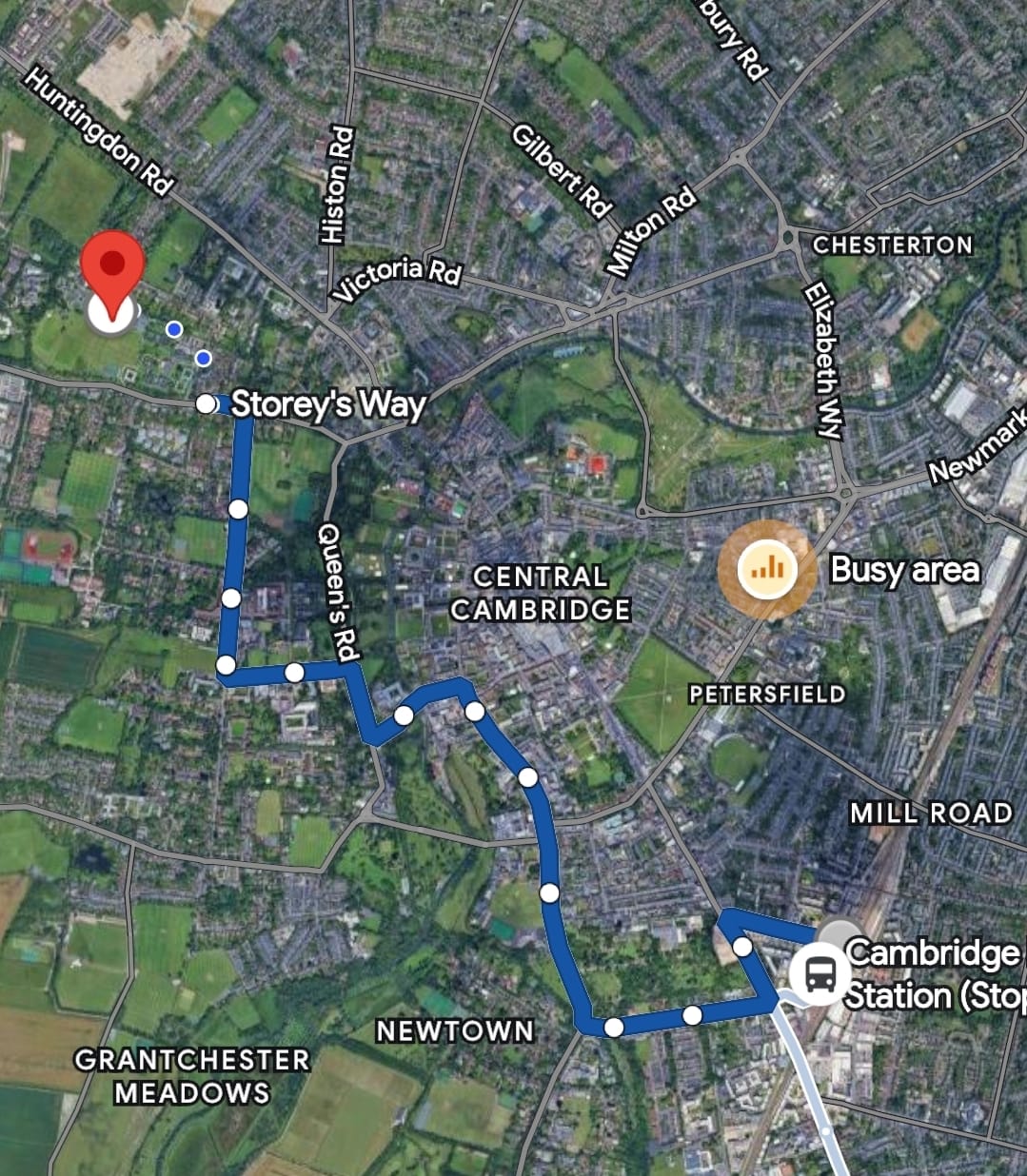
- Venue: Møller Institute, Churchill College, Storey’s Way, Cambridge CB3 0DE - (free parking available)
- From Cambridge Railway Station, walk 3 minutes to Cambridge Railway Station (Stop 8).
- Take the U2 Universal bus towards Sainsbury’s.
- Get off at Storey’s Way after 13 stops (around 20 minutes).
- From there, walk about 10 minutes to the Møller Institute.
- On arrival at the Møller Institute, turn left towards Study Centre meeting room 11. Signs will be on site.
Can’t attend in person? A remote attendance option is available.
Free Registration: Link to sign up form - Registration closes on 8th May 2026
Accessibility: wheelchair access, step-free routes.
Audience: AIRR Dawn users from academia and industry, including researchers, principal investigators (PIs), PhD students, postdoctoral researchers, the Cambridge Research Computing team, and invited stakeholders from industry.
What is AIRR@CAM User Day?
This event is designed to:
- Showcase user use cases and experiences on Dawn.
- Gather feedback and discuss support, training, and future priorities.
- Encourage connections and potential collaboration between academic and industry users.
- Help establish and grow an active AIRR user community.
Call for Talks
Talk slots are currently full; you can still submit interest via the registration form and we’ll contact you if space becomes available.
Agenda:
Session 1:
- 09:30–10:00 – Arrival & Coffee
- 10:00–10:15 – Welcome & Objectives
- Richard McMahon – University of Cambridge
- 10:15–10:35 – Introducing Zenith the next evolution of AIRR Service at Cambridge
- Chris Edsall - University of Cambridge
- 10:35–11:00 – Collaborating with AIRR Users to Improve AI Software Functionality on Intel and AMD GPUS
- Karl Harrison – University of Cambridge
- 11:00–11:20 – Break
Session 2:
- 11:20–11:40 – Submitting jobs and best practices with Slurm
- Stuart Rankin – University of Cambridge
- 11:40–12:00 - DSIT / UKRI reflections on the AIRR programme
- DSIT / UKRI reflections on the AIRR programme
- 12:00–12:30 – VR Data Centre Tour
- 12:30–13:30 – Lunch (provided)
Session 3 - Industry & Research use cases:
- 13:30–13:55 – Hivemind AX: production‑grade multi‑agent AI orchestration for regulated enterprises
- Giovanni De Lillo - Hypereum Ltd
- 13:55–14:20 – CANOPY: a multi‑modal biological foundation model designed to reason across the full stack of engineering biology
- Satnam Surae - Twig Bio
- 14:20–14:35 – Aevum Foundry AI
- Ana Teixeira Jardim - Aevum Foundry
- 14:35–14:45 – Training AI models to classify memory for consumer and business use cases
- Rhea Anjali Deshpande - Hey Maple
- 14:45–14:55 – Solving Minority Class Problems: NLP for Underrepresented Populations
- George Unsworth - Mortar
- 14:55-15:05 - Beyond ‘It Runs’
- Tomas Lazaukas - Alan Turing Institute
- 15:05–15:30 – Break
Session 4 - Academic use cases:
- 15:30–15:40 – Porting the Aurora Weather Model to Intel Accelerated Hardware
- David Llewellyn-Jones - Alan Turing Institute
- 15:40–16:00 – The UK Cancer Vaccine AI Scientist and Supercomputing Project
- Lennard Lee - University of Oxford
- 16:00–16:05 – Deep Learning with Audio and Music
- Johan Pauwels - Queen Mary University of London
- 16:05-16:15 - NeuralBind: Informing binding affinity prediction with large-scale co-folding predictions
- Wei-Tse Hsu - University of Oxford
Session 5:
- 16:15–16:30 – Autonomous Edge-to-HPC Workflows with Dynamic Resource Orchestration
- Yasar Majib - Cardiff University
- 16:30 - 16:35 - Wrap up